A Year of Seasonal Celebrations: From Setsubun to Tsukimi
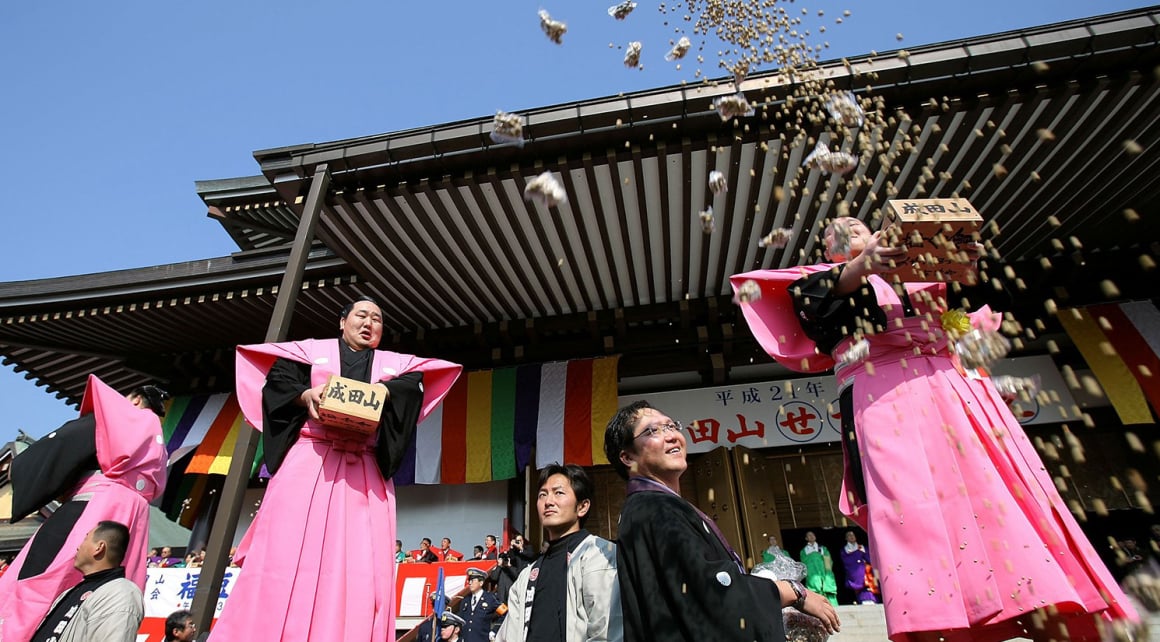
Japan’s seasonal celebrations extend far beyond the famous trio of matsuri festivals, cherry blossom viewing, and New Year customs. To truly understand the country’s rhythm, you must explore the smaller, quieter traditions that fill the gaps between major holidays. This journey begins with Setsubun (February 3rd), the day before spring according to the old lunar calendar. During Setsubun, families throw roasted soybeans at a demon mask while shouting “Oni wa soto! Fuku wa uchi!” (Demons out! Fortune in!). Unlike lantern festivals which focus on light, Setsubun uses sound and motion to purify the home. It is one of the few seasonal celebrations where you are encouraged to be loud and slightly silly.
After Setsubun, the next hidden gem among seasonal celebrations is Hina Matsuri (March 3rd), also known as Doll’s Day or Girls’ Day. Families display elaborate tiered platforms of traditional dolls representing the Heian court. This has nothing to do with matsuri festivals of the portable shrine type—it is a private, indoor seasonal celebration. Unlike cherry blossom viewing which is public, Hina Matsuri happens inside homes. People drink sweet amazake and eat diamond-shaped chirashi sushi. The dolls are taken down immediately after March 3rd; leaving them up is said to delay marriage for daughters. This precision timing is typical of seasonal celebrations in Japan.
Moving into summer, alongside lantern festivals, we find Tanabata (July 7th). This seasonal celebration comes from a Chinese star festival legend about two lovers separated by the Milky Way. People write wishes on colorful strips of paper (tanzaku) and hang them on bamboo branches. Some cities combine Tanabata with matsuri festivals and lantern festivals, but in its pure form, Tanabata is quiet and poetic. Unlike New Year customs which look ahead for the whole year, Tanabata wishes are often small and specific: good grades, recovery from illness, meeting a friend. You can participate anywhere with bamboo leaves and a brush.
Autumn brings two major seasonal celebrations: Shichi-Go-San (November 15th) and Tsukimi (September–October). Shichi-Go-San means “Seven-Five-Three” and celebrates children of those ages. Families dress up and visit shrines—this is closer to New Year customs in spirit but dedicated to growth rather than the new year. Meanwhile, Tsukimi (moon-viewing) is the autumn equivalent of cherry blossom viewing. People display pampas grass and offer white rice dumplings (tsukimi dango) to honor the harvest moon. Unlike lantern festivals which are man-made light, Tsukimi celebrates natural moonlight. During Tsukimi, you will see convenience stores selling “moon burgers” and restaurants adding raw eggs to noodles (the egg represents the moon).
What connects all these seasonal celebrations is their deep connection to nature and avoidance of commercial content. There are no branded decorations for Setsubun or Tsukimi. No one sells investments during Hina Matsuri. Unlike lantern festivals which have become tourist attractions in some cities, these smaller seasonal celebrations remain intimate. You can experience them without joining matsuri festivals crowds. Even cherry blossom viewing can feel overwhelming, but Tsukimi is always calm. A group of friends sitting under an autumn moon, eating dango, is the anti-thesis of noisy spectacle.
By following a full year of seasonal celebrations—Setsubun’s beans, Hina Matsuri’s dolls, Tanabata’s stars, Shichi-Go-San’s children, and Tsukimi’s moon—you see a different Japan. Not the Japan of parade floats and portable shrines (matsuri festivals), nor the pink postcards of cherry blossom viewing, nor the solemn bells of New Year customs. Instead, you find a Japan of small gestures: a bean thrown at a demon, a wish tied to bamboo, a dumpling offered to the moon. These seasonal celebrations sustain Japanese culture day by day, season by season. And they are waiting for you, without brands, without banks, without any price beyond your attention.